
The Lincoln cent series started in 1909, and the series is still a part of US coinage. The obverse shows Abraham Lincoln, while the reverse design has changed over time.
Pennies from the 1960s still can be found in daily change. When people face it, they think that the date looks old, so if the piece should it be kept or spent?
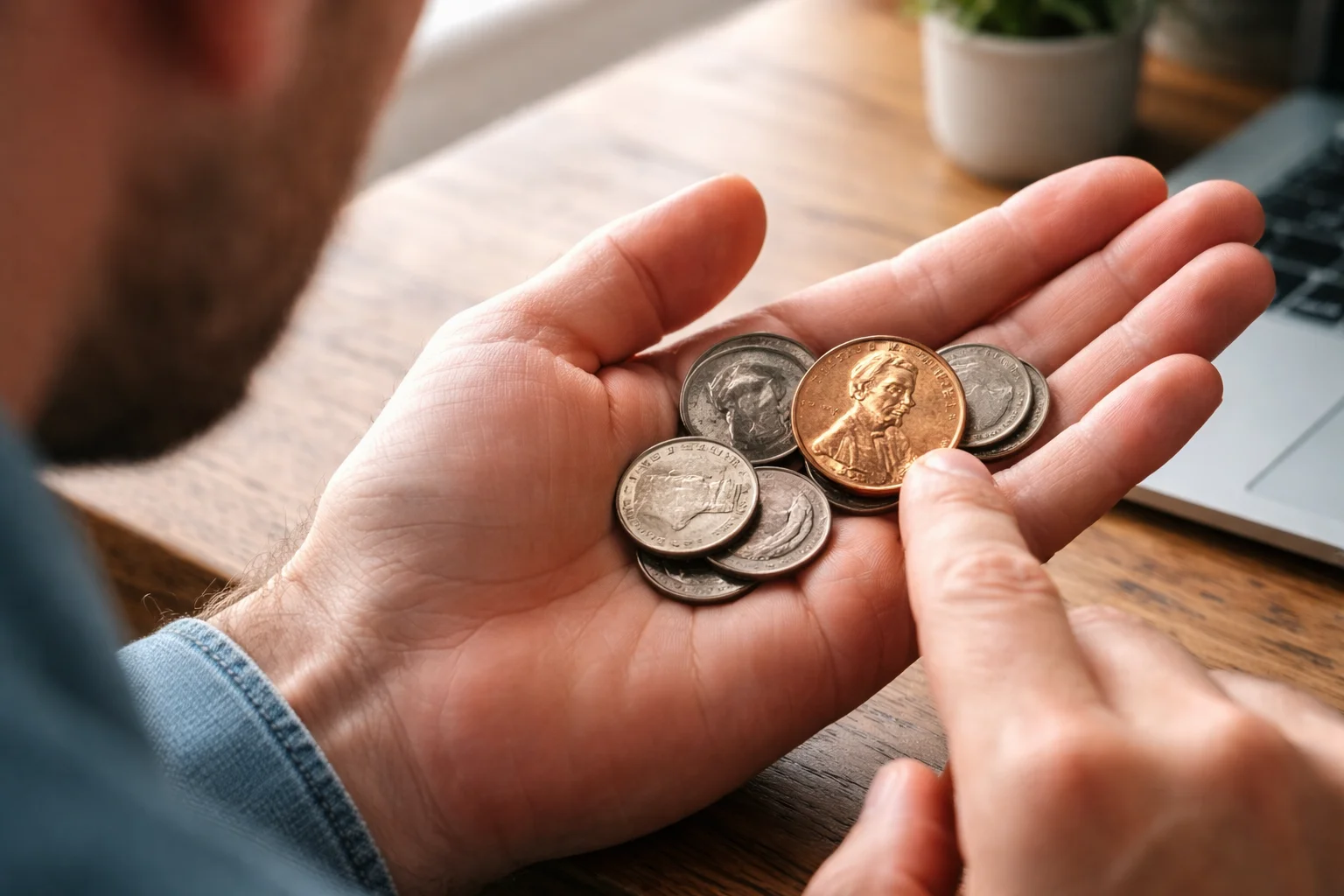
Quick Identification: Is It Really a 1966 Penny
Start with identification. Do not think about value yet.
Firstly, check the date. Look closely at the last digit. Wear can blur the “6,” making it look like another year.
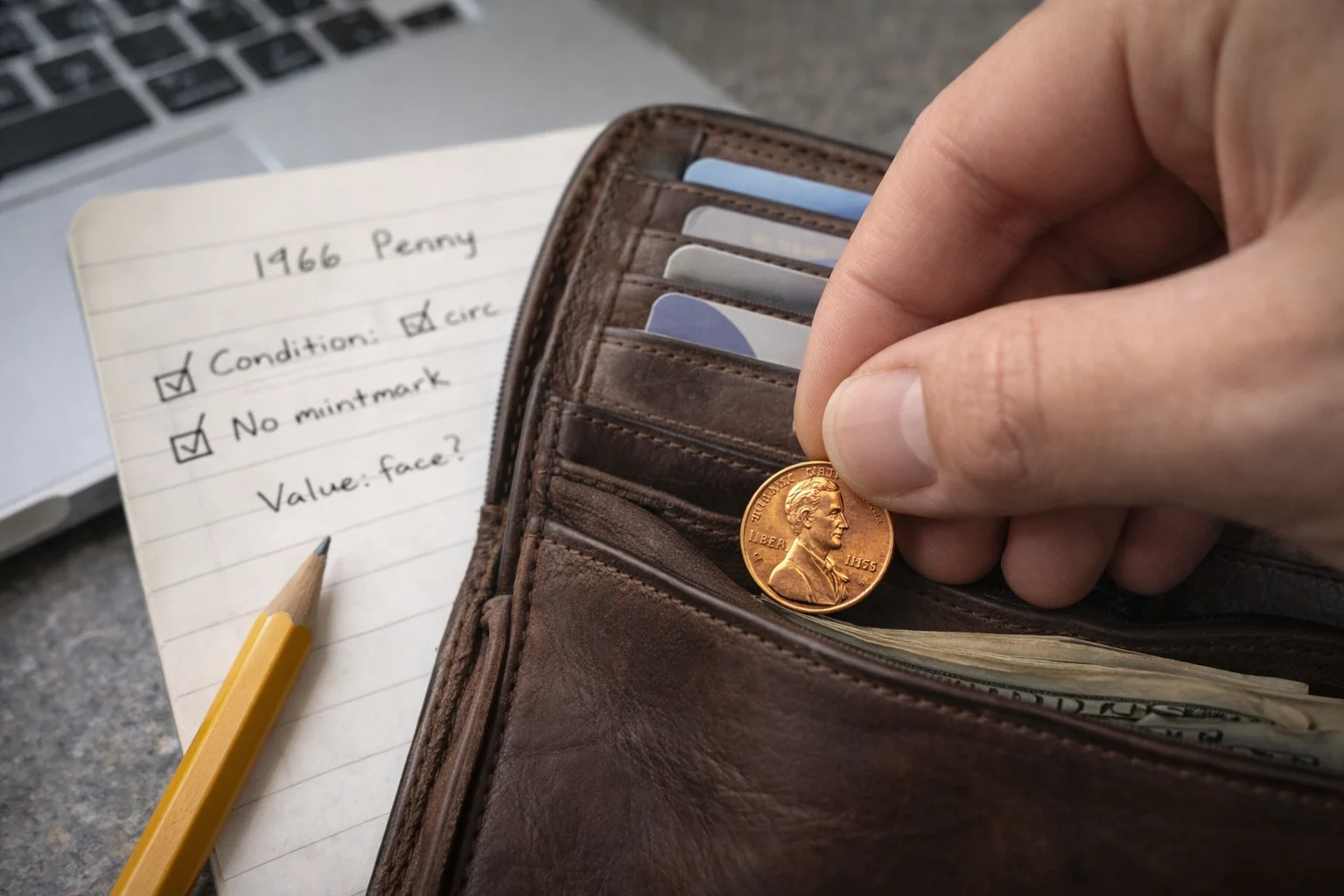
Next, look for a mint mark. Pennies from this year were struck only in Philadelphia. That means a 1966 penny no mint mark is normal. Thus, the coins of this years have no “D” or “S” mint marks, that cannot influence the coin’s rarity and price.
Design details help confirm the year. On the obverse you can see Lincoln’n portrait with sharp lettering around the rim. The reverse shows the Lincoln Memorial (the design used from 1959 to 2008).
If the coin matches these points, the identification is complete.
Basic Identification Points
Feature | Detail |
Year | 1966 |
Mint mark | None (Philadelphia) |
Obverse | Abraham Lincoln |
Reverse | Lincoln Memorial |
Composition | Copper alloy (95% copper, 5% tin, and zinc) |
Weight | 3.11 grams |
Diameter | 19.05 mm |
Edge | Plain |
Correct identification prevents most mistakes. Many coins are misread because of wear or poor lighting. Value checks only make sense after this step.
Composition and Metal: What the Coin Is Made Of
The 1966 penny is struck in a copper alloy. The standard mix is 95% copper with small amounts of zinc and tin.
There is no silver. The metal content does not create a price floor above face value. Weight is about 3.11 grams. Diameter is 19.05 mm.
Metal matters for authentication, not profit. If weight or size is far off, damage or alteration is more likely than rarity.
Condition Comes First: What to Look At
Condition decides almost everything.
Most 1966 pennies circulated for years. Wear follows clear patterns. High points lose detail first. Flat areas expand over time.
Focus on these areas:
Lincoln’s cheek and jaw
Hair above the ear
Coat lines
Memorial columns and steps
A coin with smooth surfaces and weak detail has seen heavy use. A coin with sharp edges and original texture avoided long circulation.
Collectors must separate three issues:
Circulation wear shows smooth, even flattening.
Weak strike shows flat areas but normal metal texture.
Damage looks random. Scratches, dents, or cuts break the surface.
Confusing these points leads to overestimation. Soft detail usually comes from use, not mint problems.
And remember to use good light, it can be even more important than magnification. Tilt the coin and watch how light moves across the surface.
Circulated vs Uncirculated: A Clear Difference
Most examples found today are circulated: they look dull, luster is gone, and details are muted.
Uncirculated coins stand apart. They keep their original shine. High points remain sharp. Contact marks may appear, but wear is absent.
This difference matters more than the date.
Circulated vs Uncirculated
Feature | Circulated | Uncirculated |
Surface | Dull, smooth | Bright, textured |
Detail | Soft, flat | Sharp |
Luster | Absent | Present |
Market interest | Low | Higher |
Saving a worn 1966 penny rarely makes sense. Saving a clean one can.
Mint Errors: When a 1966 Penny Is Worth a Second Look
Errors matter more than the year. Collectors pay for mistakes made during striking, not for damage that happened later. Errors must be clear and easy to verify.
Many so-called errors come from die wear. These are common and usually carry little value.
Common 1966 Penny Errors
Error type | What it looks like | Typical price range |
“L” in LIBERTY on rim | The letter touches the rim from the die wear | $2–$10 |
Doubled Die Obverse (DDO) | Doubling on date or letters | $30–$150+ |
Grease strike | Missing or weak design parts | $10–$60 |
Off-center strike (10–20%) | Image shifted off center | $15–$100+ |
Lamination | Peeling or flaking metal | $10–$50 |
Die break / cud | Raised metal near the rim | $25–$150 |
Clear errors with strong eye appeal attract buyers. Weak or worn examples do not. For most people, an error is the only reason a circulated 1966 penny rises above face value.
Why Most 1966 Pennies Stay Ordinary
Three factors explain it.
First, mintage was high. Large numbers entered circulation.
Second, these coins saw long use. Pennies stayed in pockets, jars, and drawers for decades.
Third, survival in high conditions is low. Wear removed detail long before collecting interest formed.
Because of this, expectations often exceed reality. Many lists of coins worth money include 1966 pennies without context, and that creates confusion. The market does not follow age alone, but condition and scarcity.
FAQs
Is a 1966 penny rare?
No. Production numbers were high. Most surviving coins are easy to find and remain common.
Does the missing mint mark increase value?
No. All 1966 pennies were struck in Philadelphia without a mint mark. This is normal and expected.
Can a worn 1966 penny gain value later?
No. Wear only reduces appeal. Heavily circulated coins rarely attract new demand over time.
Are mint errors more important than the date?
Yes. Well-defined errors draw more interest than the year itself, especially when the condition is strong.
What tools can I use at home to check my coin?
Use good lighting and a simple loupe. Buy a scale to confirm weight and compare it with known examples and main parameters to prove them and improve accuracy. You can also try the best coin value app, such as Coin ID Scanner, to confirm type, store notes, and review estimated ranges. It helps organize information and ask some questions with a built-in AI helper. The coin has 187,000 world coins in the database and offers clear coin cards with all main parameters. But remember that the app cannot replace experts' opinions. Condition and demand still decide value.
How to decide of a 1966 penny should be kept or spent?
Keep it if it is uncirculated. Keep it if it shows a clear error. Keep it if you want a comparison piece. Otherwise, spending it is reasonable.
Conclusion
The 1966 penny is easy to find. It is not rare. Most examples remain ordinary.
Remember that value depends on condition and errors, not the date. But clean surfaces and minting errors matter, while wear lowers interest.
Checking a coin carefully prevents false expectations. That knowledge matters more than hope and guesses.